A Major Research Conference in Kigali
Rinda Ubuzima took part in the First African Neonatal Association Scientific Conference, held right here in Kigali. Its theme was clear and ambitious: leading the acceleration of neonatal care improvement across Africa. The conference drew significant regional attention, given the scale of the neonatal health challenge across the continent.
Researchers, clinicians, and health leaders from across Africa gathered to share their work. Our team was proud to be among them.
Presenting Our IMPALA Research
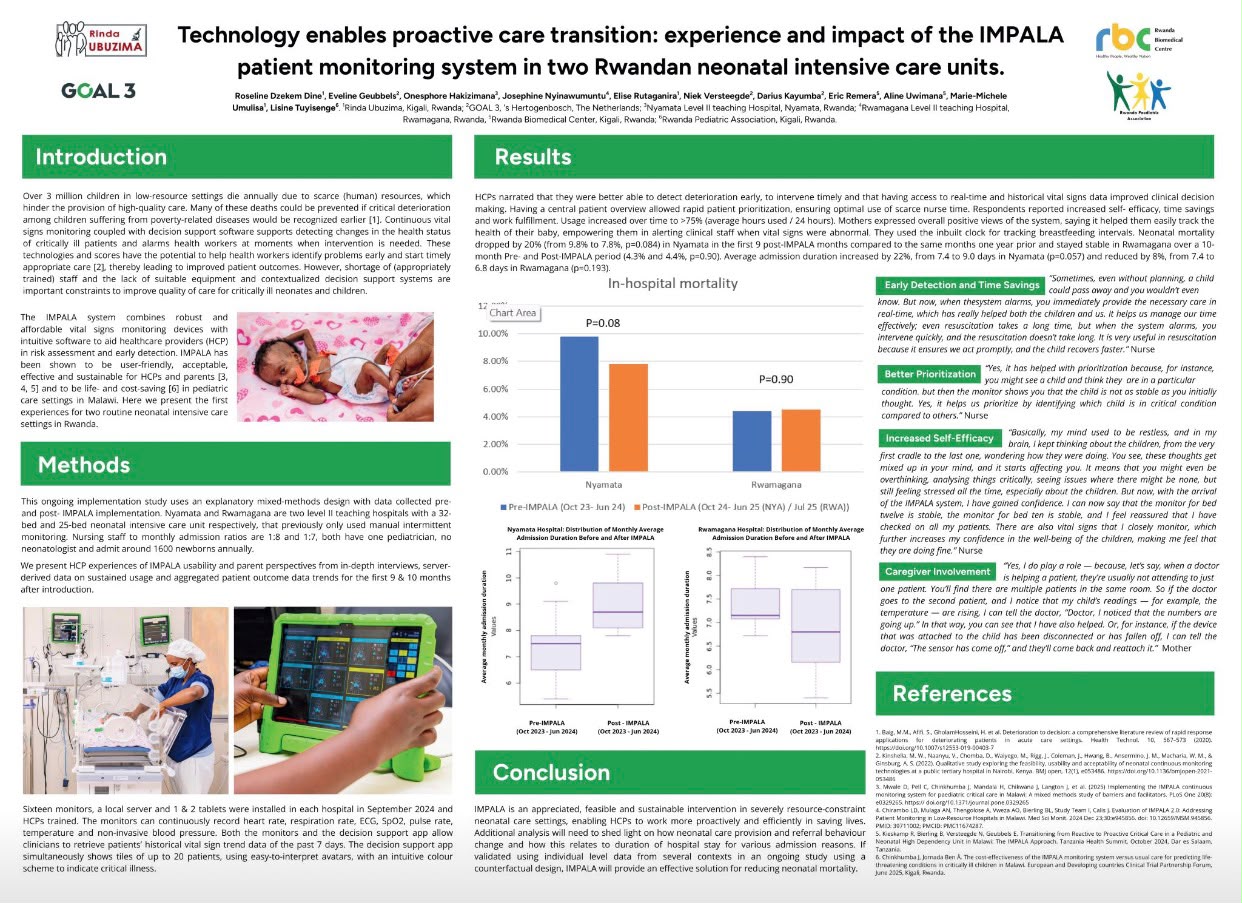
Our researchers presented findings on the IMPALA patient monitoring system. The study looked at its real-world impact across two neonatal intensive care units in Rwanda. Specifically, it explored how the technology supports proactive care transitions for newborns.
This research reflects years of careful, collaborative work. It was conducted alongside the Rwanda Biomedical Centre, GOAL 3, and the Rwanda Paediatric Association.
Recognized with Best Poster Presentation
The research earned the Best Poster Presentation Award at the conference. This recognition came from an independent panel of peers, which makes it especially meaningful. Congratulations go to Roseline Dzekem Dine and the entire research team.
Awards like this validate more than just one study. They reflect the quality and rigor behind Rinda Ubuzima's broader research program.
What This Means for Neonatal Care
Improving neonatal care remains one of the most urgent health priorities across Africa. Therefore, research like this has real, practical stakes. Better monitoring systems can directly improve outcomes for the smallest and most vulnerable patients.
We remain committed to advancing this work, alongside our partners, in the years ahead.
